
Summary
No, you cannot accurately forecast lottery numbers for a future drawing. Every valid combination in a fairly run game starts with the same odds, and yesterday's results do not make the next draw easier to call. That does not mean every number picker is a scam—many tools, including entertainment-based prediction pages, simply help you choose a line the same way a Quick Pick does. They do not change your odds; only guaranteed-forecast claims deserve real skepticism.
Why Forecast Claims Don't Hold Up
What past draws actually show
A finished drawing tells you what already happened. It does not tell you what comes next. In a fairly run game, the draw process does not remember that 7 appeared last week any more than a shuffled deck remembers which card was on top before. The same combination can repeat soon, or stay away for months, without giving you a forecast you can trust.
Why streaks look meaningful
Runs of odd numbers, repeated digits, or a number that has not shown up in weeks are easy to notice—and easy to overread. Players often treat those shapes as signals. In random data, clusters and gaps show up all the time. A number that looked hot can go quiet immediately; one that looked overdue can stay missing longer than anyone expects. If you want a grounded sense of how long the odds really are, Odds of Winning the Lottery puts jackpot chances in plain terms.
What an actual forecast would require
Forecasting the next draw would mean knowing the outcome before the balls drop or the certified random process runs. Licensed games do not give players, retailers, or apps access to that information. That is different from using software to sort history, print a ticket, or suggest a fun line to play—those are number-selection tools, not forecasts. When a product promises certainty about what will win, ask for documented results across many drawings, not one lucky screenshot.
How Random Draws Actually Work
Each drawing starts fresh
Random does not mean perfectly spaced. It means the next result is not tied to the last one. Whether a game uses balls, a mechanical draw, or a certified digital process, the point is the same: every valid combination should have the same chance when sales close and the draw begins.
The overdue-number trap
Many players assume a number becomes more likely because it has been missing. That is the gambler's fallacy—the belief that past outcomes balance out in the short run. They do not. Tracking streaks can be interesting, but streak tracking alone cannot tell you the next winning line. The same limit applies to forecast claims: math can describe odds and apps can organize old results, yet neither can access a random future outcome.
Patterns after the fact
People are good at finding order in noise. A chart of old results will always contain shapes that feel deliberate once you know the ending. That is why pattern-heavy tools can look persuasive while adding no edge. For how selection method compares, Do Quick Picks Win More Than Manual Numbers walks through two common approaches without changing the underlying odds.
What Hot, Cold, and Overdue Numbers Really Mean
Labels, not forecasts
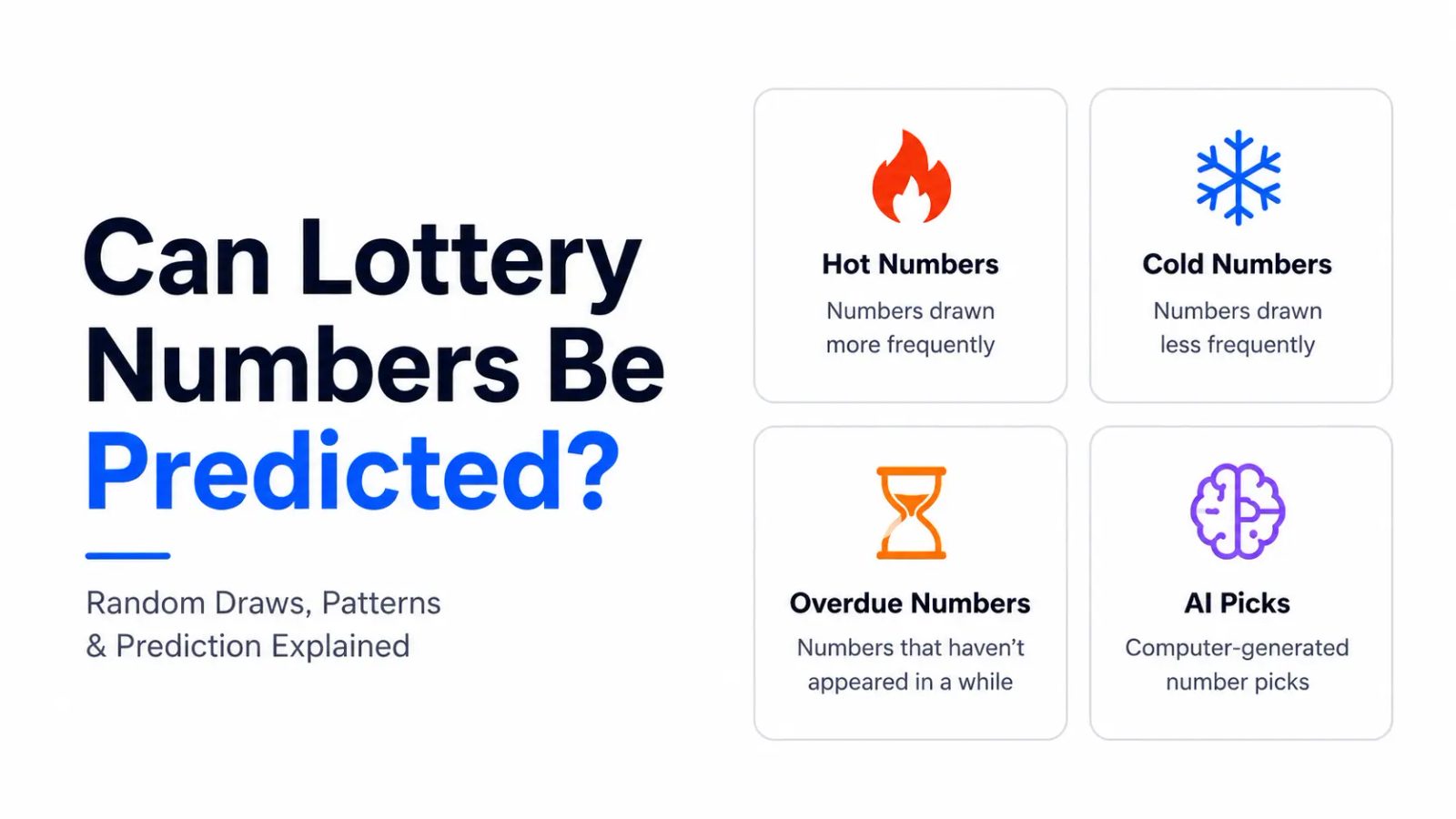
Hot, cold, and overdue are shorthand for what has already appeared—or has not—in past drawings. A number that hit three times last month is not carrying momentum into the next draw. One that has been absent for weeks is not building pressure toward a hit. The labels help you describe history; they do not rewrite probability.
When frequency charts mislead
Charts and apps that rank numbers by recent frequency can make a ticket choice feel informed. What they really show is backward-looking counts. In a fair game, the next drawing is still a separate event. Clusters like 7, 14, and 21 appearing in the same month can happen by chance and still mean nothing for the draw that follows.
If you use analysis pages to study how a major game is structured, treat them as reference—not as a pick list. Powerball Number Analysis is useful for understanding format and past results, not for calling the next line.
Quick Picks, Generators, and Entertainment Picks
Same odds, different ways to choose
A Quick Pick lets the terminal choose the numbers. A self-selected ticket uses birthdays, anniversaries, or a favorite pattern. An entertainment-based prediction page or random generator gives you a structured line to play. All of them face the same win probability in a fair draw. None of them forecasts the result—they only change how the numbers get chosen.
Where the difference actually shows up
The practical split is not win rate—it is jackpot sharing. Many players favor numbers between 1 and 31 because of dates. If those numbers hit, you are more likely to split the top prize with other tickets using the same pattern. Quick Picks and many generators spread combinations more broadly, which can reduce—but not remove—the chance of sharing a large jackpot. That is a prize-pool issue, not proof that one pick method is smarter.
Swipe sideways to compare all columns.
For game-specific format and historical context, Mega Millions Number Analysis is a solid reference page—for understanding the game, not forecasting it.
Forecast Claims vs. Fun Number Pickers
When a product is overselling
Skepticism belongs with sellers who promise precision, guaranteed wins, secret formulas, or a repeatable edge across every major game. Real randomness is not a puzzle with one hidden answer waiting in a spreadsheet. Be cautious when a product avoids explaining its track record, uses cherry-picked wins, or leans on one viral screenshot.
When a tool is just helping you pick
Many apps and sites—including entertainment-based prediction pages—do not claim to know the future. They use draw history, frequency signals, game rules, or AI-assisted logic to suggest a line to play. That is number-selection support, the same category as a Quick Pick or a random generator: structured, sometimes fun, and not an improvement in official odds.
Lottery Valley predictions work this way. Pages use historical draw data and game-specific number ranges to publish entertainment-based number ideas for U.S. games. They can make picking feel more organized; they do not forecast what will win or guarantee a ticket. If you want a neutral generator instead, Quick Pick Generator fills a similar role without the prediction framing.
AI picks without a forecast
Chatbots and lottery apps can produce neat-looking lines on demand. Neat-looking is not the same as more likely. A model can mimic common player habits, avoid obvious repeats, or label a set balanced—but the draw itself stays random. Asking for hot, cold, or overdue numbers usually returns descriptive language about the past, not a reliable forecast. The line can still be fun to play; it just is not a crystal ball.
What Draw History Is Good For
Draw history is at its best when you use it to verify—not forecast. It can confirm posted winning numbers, help you check whether a ticket matched the right game and date, and show how a game's number pool or prize structure is set up. That matters because formats differ across Powerball, Mega Millions, and state games.
History can also show how jackpots have moved over time or when rule changes landed. It cannot tell you which line will hit next, whether a streak will continue, or which overdue number is finally due—because, in a fair draw, none of them are.
When you need the official record, start with Latest Lottery Results and cross-check against your state lottery site for cutoff times, draw schedules, and how results are posted.
Next Step
Find Your Lottery Game
Browse our U.S. Lottery Numbers Directory to search 300+ games by name, format, or state and open dedicated results pages.
Key Takeaways
- Past drawings help you verify winning numbers and check ticket status—they do not reveal what comes next.
- Hot, cold, and overdue labels describe history only. A long absence does not make a number more likely on the next draw.
- Quick Pick, self-selected tickets, and entertainment prediction pages share the same win odds—they differ in how you choose numbers, not whether your line is more likely to hit.
- Forecast claims—guaranteed wins, secret formulas, certainty about the next draw—are what to question, not fun number pickers that never promise an edge.
- Game rules, draw schedules, and cutoff times vary by state and channel—confirm details on your official lottery source before you play.
Common questions
[01]Can lottery numbers be predicted accurately?
[02]What does it mean when a lottery draw is independent?
[03]Are hot, cold, or overdue numbers useful signals?
[04]Can I use lottery prediction pages to pick numbers?
[05]Are Lottery Valley predictions guaranteed to win?
[06]Can ChatGPT or paid formula tools beat random draws?
[07]Do quick picks win more often than chosen numbers?
[08]What can draw history actually tell me?
[09]Where should I verify official lottery rules and results in the U.S.?
About the author

Founder