
Summary
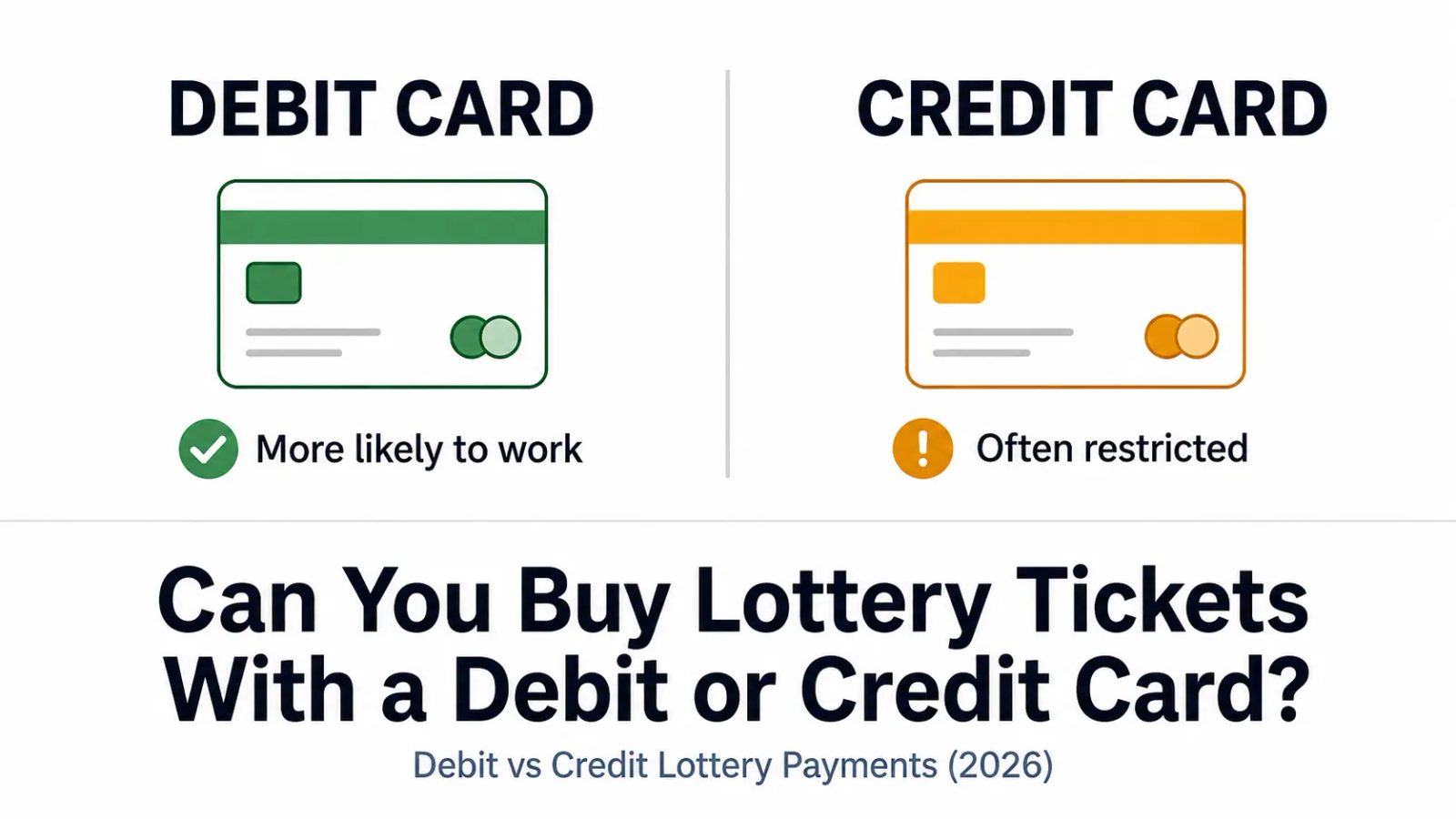
You can buy lottery tickets and scratch-offs with a debit or credit card in many states, but not every store or machine accepts cards. Debit usually works more often than credit. Use the jurisdiction table below for 2026 credit, debit, and cash-only rules.
Yes, you can sometimes buy scratch-offs and other lottery tickets with a debit card, but not everywhere. Debit is usually accepted more often than credit, yet the real answer depends on your state lottery rules, the store’s card setup, and whether you are buying at a counter, a vending machine, an official lottery app, or through a courier. Credit is more restricted and should never be assumed to work. Use the national table below for statewide rules, then confirm at checkout.
Can you buy scratch-offs or lottery tickets with a debit card?
Often yes, but not universally. In many states, licensed retailers can accept debit cards for scratch-offs and draw-game tickets when their payment system allows it. Scratch-offs usually follow the same statewide payment rules as other lottery products, but a store can still require cash, block credit, or limit PIN-debit lottery sales even when debit works for groceries or gas.
Powerball, Mega Millions, and other draw games are typically sold under the same retail payment rules as scratch-offs in a given state. The difference is usually the sales channel—counter, vending machine, official app, or courier—not the game name on the ticket.
Why the answer changes from one store or state to another
One statewide label rarely tells the whole story. Five layers can all affect whether your card works: state law, the lottery’s own policy, the retailer’s register settings, the machine or app you are using, and your card issuer’s rules.
That is why debit may work at one lottery counter and fail at another in the same state, and why a vending machine beside the register can follow different card rules.
For local game pages and results, browse lottery numbers by state.
Lottery payment options by U.S. jurisdiction
Debit cards are accepted for lottery ticket and scratch-off purchases in more U.S. jurisdictions than credit cards. Credit card purchases are restricted or prohibited in many states. The table below shows statewide credit, debit, and cash-only guidance, plus notes where channel or retailer rules matter.
Keep in mind that payment rules can vary by jurisdiction, retailer, and purchase channel. Even in places where card payments are allowed, individual stores may still choose not to accept certain payment methods for lottery purchases.
A Yes in the debit or credit column describes statewide guidance, not a guarantee that every retailer, vending machine, or app will accept your card. Retailers and issuers can still block the transaction.
Last reviewed: July 7, 2026
Swipe sideways to compare all columns.
When Credit Card and Debit Card Lottery Purchases Work
Debit vs Credit: What Changes
- Debit card purchases are more likely to go through in-store because they behave like a standard purchase tied to available funds, especially when run as a PIN debit transaction.
- Credit card purchases are more frequently blocked or restricted because many issuers treat lottery sales as gambling or “cash-like” activity, which can trigger a decline or a cash-advance classification.
- Example: a player may be able to buy a $10 draw ticket with a debit card at a convenience store, but the same store’s terminal may reject a credit card for that exact item even though it accepts credit for snacks and fuel.
Where Card Payments Are Accepted
In-store acceptance is largely controlled by the retailer’s point-of-sale setup and what the state lottery allows retailers to do. Some locations permit debit for draw games but not for scratch-offs, or they require a minimum purchase amount for card transactions. Online is a separate story: only certain states authorize online ticket sales, and approved platforms often accept debit cards more consistently than credit cards due to issuer risk rules. Even within the same state, a lottery app might accept Visa debit while a local retailer only accepts cash for lottery items.
Common Limits, Holds, and Declines
Even when card payments are allowed, the transaction can still fail because the purchase is coded in a way your issuer flags, because the terminal routes it through a restricted network, or because the merchant has lottery items set to “cash only.” You can also see temporary authorization holds that reduce available balance, particularly on debit, until the transaction fully settles. A realistic scenario is a $20 debit purchase showing a pending hold for a short period, while a credit attempt is declined immediately with a generic “not permitted” message.
Why Transactions Fail at Checkout
The most common causes are issuer gambling blocks, cash-advance restrictions on credit, mismatched merchant category coding, or retailer settings that separate lottery from general merchandise. This is why two people can stand at the same counter, buying the same ticket, and get different results based on card type and bank. With those decision layers in mind, it becomes easier to compare credit vs debit for lottery tickets and set expectations before you reach the register.
What Controls Card Acceptance at Lottery Retailers
State Lottery Payment Policies
State lottery agencies set the baseline: what products may be sold, through which authorized channels, and which payment types are allowed in each channel. Some states permit card payments only in specific contexts (for example, online accounts or subscription-style sales where offered), while in-person retailers may be restricted to cash or PIN debit. Even when cards are allowed, rules can differ by product category, such as draw-game tickets versus instant scratch-offs.
Retailer POS and Processor Limits
Retailers then apply their own operational controls. A store may disable card tender for lottery on its register to reduce chargeback exposure, speed up the line, or simplify reconciliation. Others allow debit card transactions but only if the cashier selects a specific “lottery” tender key and the terminal supports it. Training matters: one clerk may know the correct workflow, while another defaults to “cash only,” creating the impression that the policy changed.
Store A and Store B are both authorized lottery retailers. Store A’s register blocks “credit” for lottery items but allows “debit” with PIN; Store B’s register blocks all card tenders for lottery. Your debit card works at A, but neither credit nor debit works at B, even though both stores accept cards for groceries.
Card Network and Bank Controls
Even if the state and retailer allow it, the card transaction still has to clear network and bank rules. Lottery purchases are commonly routed under gambling-related merchant category codes, and some issuers automatically decline those transactions, especially for credit. That’s a key difference in “can you buy lottery tickets with a credit card” versus “can you buy lottery tickets with a debit card”: debit may be approved as an everyday purchase (or via PIN routing), while credit can be treated as a higher-risk category or a cash-advance-like event depending on issuer settings.
Swipe sideways to compare all columns.
The implication for payment-method comparison is straightforward: “accepted” is not a single yes/no rule, it’s the intersection of all three layers. That’s why a debit card can be accepted at one retailer while a credit card is refused, and why acceptance can vary without any obvious signage or policy change.
If you want a faster way to evaluate lottery payment methods by channel and avoid surprises at the register, Lottery Valley’s tools can help you compare common acceptance patterns before you buy.
Common Reasons Card Lottery Transactions Don’t Go Through
Merchant Category and POS Restrictions
Many declines happen before your bank even weighs in. The retailer’s point-of-sale (POS) system can be configured to block certain tender types for lottery, enforce “cash only,” or allow only specific rails (commonly debit with PIN). Some stores also cap card-enabled lottery amounts per transaction, require a minimum basket size for card use, or refuse split tenders that mix lottery with other items on one payment. Example: a clerk rings up $20 in scratchers plus a $3 drink; the POS may allow the drink on card but reject the combined sale because lottery is on the ticketed side of the register rules.
Issuer Gambling Blocks and Cash-advance Coding
- Even when the terminal allows cards, your issuer may decline because the purchase is categorized as gambling-related or as a cash-equivalent.
- With credit, some issuers treat lottery as a cash advance-like transaction, which can trigger a block, require cash-advance availability, or apply separate limits and fees.
- That’s why “can you buy lottery tickets with a credit card” often produces inconsistent results across banks and card products.
- Example: a $50 ticket purchase is declined on a credit card despite plenty of credit limit because the issuer’s cash-advance limit is set to $0 or gambling transactions are disabled.
Why Debit May Pass When Credit Fails
Debit can succeed where credit fails because PIN debit is frequently treated as a direct account authorization rather than a credit extension. If the retailer supports PIN entry and your checking account has funds, “can you buy lottery tickets with a debit card” is more likely to be yes—especially for in-person sales. That said, debit can still fail if the transaction routes as signature debit, if the network path isn’t enabled on that terminal, or if your bank flags the merchant type for extra controls.
Fraud Triggers, Velocity Limits, and Declines
Lottery purchases can look “high-risk” to automated fraud systems: repeated small authorizations, multiple attempts after a decline, or buying at an unusual time or location. Issuers also apply velocity limits (how many transactions in a short window) that can shut down approvals temporarily. Example: three rapid attempts to buy $10 scratchers at two different convenience stores can trigger a fraud decline even on a debit card with sufficient balance.
The practical implication is that reliability isn’t just about having a card—it’s about which rail is permitted and how the purchase is classified at checkout and by your issuer. That’s why debit-with-PIN tends to be the most consistent card option, while credit is the most likely to be treated as restricted or cash-like. With those failure points in mind, it helps to compare payment methods by predictability, fees, and approval odds before you get to the counter.
How Card Payments Play Out in Stores and Online
What Happens at The Checkout
In gas stations, convenience stores, and many grocery or big-box retailers, lottery purchases are often routed through a dedicated lottery terminal or a restricted department key on the register. That’s why you may be able to pay for snacks with a card but not a Powerball ticket in the same transaction. In practice, debit card acceptance is more common than credit card acceptance at retail, especially when the store can run the debit transaction with a PIN and treat it like a cash-equivalent tender.
Swipe sideways to compare all columns.
Why The Terminal Declines Card Purchases
Declines commonly happen because lottery products are treated as restricted goods by the retailer’s payment configuration or by card-network rules tied to how the purchase is categorized. If the register or terminal is set to disallow card tender for lottery SKUs, the clerk can’t override it without changing store settings. Example: a $10 scratch-off may trigger a “cash only” prompt, while a $10 pack of gum on the same register accepts tap-to-pay.
Official Lottery Sites and Apps
Where online ticket sales are legal, official lottery sites and apps usually support a narrower set of lottery payment methods than a typical e-commerce checkout. Debit cards are commonly accepted; credit cards may be limited or rejected depending on the program’s risk controls and card processing rules. Online purchases also add identity and location checks, so approval depends on more than the card itself.
Online verification can affect payment approval: Even with sufficient funds, an online purchase can fail if age verification, account identity, or in-state geolocation checks don’t pass at the time of purchase.
Courier and Delivery Service Payments
Courier-style services (where permitted) typically charge your card for the service and then purchase the ticket on your behalf at retail. That means your card is paying the courier, not the lottery terminal, so debit and credit acceptance can look more like a standard online purchase. The tradeoff is that fees and authorization holds are more common, and you’ll want to confirm how ticket images, custody, and prize claims are handled. For a broader overview of how online lottery services work and what to expect, see our Online Lottery Play Guide.
The practical implication: debit tends to be the most consistently usable “card” option in physical stores, while online channels introduce extra verification and processing rules that can matter as much as the card type. That sets up a clearer comparison of which payment method is most reliable for your preferred buying channel.
Picking The Most Reliable Payment Method for Lottery Tickets
Cash and Debit Usually Work Best
For most in-person purchases, cash is the most predictable because it bypasses card-network rules and issuer filters. If you prefer plastic, the answer to “can you buy lottery tickets with a debit card” is often yes where cards are accepted, and debit is usually the safest card option because it runs like a standard purchase or PIN debit transaction. In practice, a $10 scratch-off or a $20 draw ticket purchase on debit is less likely to be flagged as a cash-equivalent transaction than the same amount on credit.
Prepaid Cards and Digital Wallets
Prepaid cards can be hit-or-miss for lottery payment methods because some systems treat them like restricted tender, and some issuers decline gaming-related merchant codes. Digital wallets are also inconsistent in this category, since the underlying funding source still has to pass retailer and issuer checks. If your goal is a smooth checkout, treat prepaid and tap-to-pay as “nice when they work,” not your only option.
Avoiding Fees, Declines, and Holds
Credit is where the hidden costs show up. Even if can you buy lottery tickets with a credit card is technically allowed at a location, some issuers process lottery as a cash-like transaction, which can trigger a cash-advance fee, immediate interest, or a lower cash-advance limit. A $30 ticket purchase can become meaningfully more expensive if it posts as cash advance instead of a normal purchase.
The practical implication is simple: use debit (or cash) when you want the highest approval odds and the lowest chance of extra charges; reserve credit only when you’ve verified how your issuer codes lottery purchases. That keeps the “credit vs debit for lottery tickets” decision focused on reliability and total cost, not just convenience.
Quick Checklist Before You Pay
- Have a backup payment ready (cash or debit) in case the register blocks credit.
- Know whether you’re running debit with PIN or as credit; some terminals behave differently.
- Avoid using a credit card if your issuer treats lottery as cash advance or restricts gaming merchants.
- Keep receipts for ticket validation and dispute clarity, especially for multi-ticket purchases.
Once you’ve paid with the method that’s least likely to add fees or fail at the register, you can focus on the fun part: verifying outcomes and staying current on changes that affect availability and rules.
Ordering online through Jackpot.com
Jackpot.com is Lottery Valley’s recommended courier for eligible users who prefer ordering official state lottery tickets online. It currently supports Arizona, Arkansas, Colorado, Massachusetts, New Jersey, New York, and Ohio. Users must be physically located in a supported state and meet its age requirement. Read our Jackpot.com lottery courier review for supported states, ticket ordering, the 15% deposit fee, ticket records, and prize handling.
Eligible new users can also review the Jackpot.com promo code VALLEYLOTTO. The current offer is a $5 bonus credit after a qualifying first deposit of at least $2. It is bonus credit—not cash or a $5 discount—and Jackpot.com controls final eligibility.
Next Step
Find Your Lottery Game
Browse our U.S. Lottery Numbers Directory to search 300+ games by name, format, or state and open dedicated results pages.
Key Takeaways
- You can sometimes buy scratch-offs and lottery tickets with a debit card, but acceptance depends on state rules, the sales channel, and the store or machine you use.
- Debit cards are usually accepted more often than credit cards for lottery purchases, but a retailer or issuer can still decline the transaction.
- Credit card lottery purchases are restricted in many states and may be blocked, declined, or treated differently by your issuer.
- Tennessee retail sales are cash-only; Wisconsin licensed retail sales are cash-only per official lottery guidance.
- Official lottery apps, vending machines, and couriers can all follow different payment rules from the same state’s counter sales.
- Carry cash or a backup payment method if you are buying close to a draw cutoff.
Common questions
[01]Can you buy scratch-offs with a debit card?
[02]What states let you buy lottery tickets with a debit card?
[03]What states let you buy lottery tickets with a credit card?
[04]Can you buy Powerball tickets with a debit card?
[05]Can you buy lottery tickets with a credit card anywhere in the U.S.?
[06]Is a debit card more likely to work than a credit card for lottery tickets?
[07]Do lottery ticket purchases count as a cash advance on a credit card?
[08]Can you buy scratch-offs with a card the same way as draw tickets?
[09]Can you buy lottery tickets online with a credit card or debit card?
[10]Do prepaid cards work for lottery ticket purchases?
Sources checked:
47 official sourcesOfficial lottery, government, and reference sources reviewed while preparing this article.
- Arizona official lottery sourceArizona
- Arkansas Lottery FAQsArkansas
- California Lottery FAQsCalifornia
- Colorado Lottery official documentColorado
- Connecticut Lottery FAQsConnecticut
- Delaware lottery payment policyDelaware
- District of Columbia lottery payment policyDistrict of Columbia
- Florida lottery lawFlorida
- Georgia official lottery sourceGeorgia
- Idaho Lottery official documentIdaho
- Illinois Lottery FAQsIllinois
- Indiana Lottery official documentIndiana
- Iowa Lottery FAQsIowa
- Kansas official lottery sourceKansas
- Kentucky lottery payment policyKentucky
- Louisiana Lottery official documentLouisiana
- Maine lottery lawMaine
- Maryland official lottery sourceMaryland
- Massachusetts lottery payment policyMassachusetts
- Michigan Lottery FAQsMichigan
- Minnesota official lottery sourceMinnesota
- Mississippi Lottery FAQsMississippi
- Missouri Lottery FAQsMissouri
- Montana Lottery FAQsMontana
- Nebraska lottery lawNebraska
- New Hampshire official lottery sourceNew Hampshire
- New Jersey Lottery FAQsNew Jersey
- New Mexico lottery lawNew Mexico
- New York Lottery FAQsNew York
- North Carolina Lottery FAQsNorth Carolina
- North Dakota Lottery FAQsNorth Dakota
- Ohio lottery payment policyOhio
- Oklahoma official lottery sourceOklahoma
- Oregon official lottery sourceOregon
- Pennsylvania lottery payment policyPennsylvania
- Puerto Rico official lottery sourcePuerto Rico
- Rhode Island Lottery FAQsRhode Island
- South Carolina official lottery sourceSouth Carolina
- South Dakota Lottery FAQsSouth Dakota
- Tennessee lottery lawTennessee
- Texas Lottery official documentTexas
- Vermont official lottery sourceVermont
- Virginia lottery lawVirginia
- Washington Lottery FAQsWashington
- West Virginia official lottery sourceWest Virginia
- Wisconsin Lottery FAQsWisconsin
- Wyoming lottery lawWyoming
About the author

Founder